
Cedar shake roofing
Natural cedar starts with warm tones and can weather to silver-gray. The product, roof details and exposure determine how that texture ages.
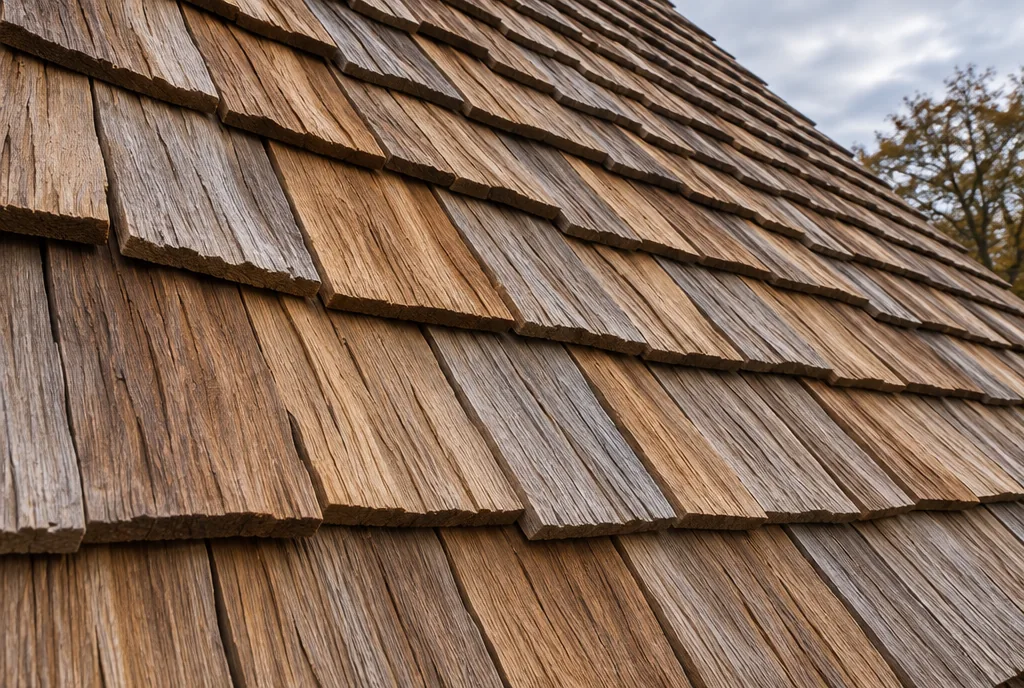
Decide how much texture you want
Split shakes follow the grain and tend to have thicker, irregular edges. Sawn cedar shingles generally have a smoother, more uniform surface. Tapersawn shakes bring a sawn face with the heavier edge of a shake. Compare full samples outdoors and think about how varied weathering will look across shaded and sunny slopes.
Specify the assembly before buying the wood
A cedar roof estimate should identify the grade, product and any treatment. Ask about the deck, fastening, ventilation and the layers specified by the manufacturer. For a tear-off, review flashing at valleys, sidewalls and chimneys. Where fire performance matters, confirm the rating of the proposed assembly and the requirements for your property.
Plan for regular inspection
Tree debris and areas that stay damp merit a closer look. Check from the ground for split, cupped or missing pieces and note where debris gathers. An inspection can distinguish ordinary color change from wear that affects the roof. Ask about a maintenance plan suited to the product and exposure.
Frequently asked questions
Does cedar keep its original color?
Untreated cedar commonly shifts from warm brown to gray as it weathers. Sun, shade and moisture can produce different tones across the roof.
Can I replace individual cedar shakes?
A localized repair may be possible. It depends on the surrounding material, condition of the layers below and whether the size, exposure and thickness can be matched.
How should I compare a cedar shake look with asphalt?
View full samples in daylight. Compare texture and shadow line, then ask for maintenance, treatment and installation details for the exact cedar or architectural shingle system.
Know exactly what your home needs.
A free inspection to discuss visible conditions and a written estimate you can review before deciding.